Eco-friendly camping: how to make your trip greener
Camping is already one of the most environmentally friendly types of holiday, but you can shrink the impact further: choose a certified campsite (for example Green Key or the EU Ecolabel), save water and energy, avoid single-use plastic, use biodegradable soap, respect nature by following 'leave no trace', and travel a shorter distance or by public transport.
NPO Radio 1 this summer encouraged campers to be aware of their impact on the world. The good news: camping is already one of the greenest ways to travel. With a few mindful choices you can make your trip even more sustainable, without losing any of the fun. Here is a practical guide, not preachy but encouraging.
Camping starts with a head start
Campers travel light. A tent or pitch needs far less energy, water and space than a hotel or holiday home. You live closer to nature and quickly notice what you use. That awareness is exactly what sustainable camping is about.
The point is not to be perfect. Every small choice counts: a shorter tap, a reusable cup, a walk instead of a short drive. Together those habits make a real difference.
Leave no trace: leave the spot cleaner than you found it
The 'leave no trace' principle is simple: leave your pitch at least as clean as you found it. Take all your waste with you, including organic scraps like peelings, and throw nothing into nature.
Stick to marked paths and pitches so you don't damage fragile vegetation. Only light a fire where it is allowed, using local or bought wood, never by pulling branches from the forest.
Choose a campsite with an eco-label
More and more campsites are working on sustainability and having it independently checked. Labels such as Green Key, the EU Ecolabel and ECEAT show that a site manages water, energy, waste and nature with care.
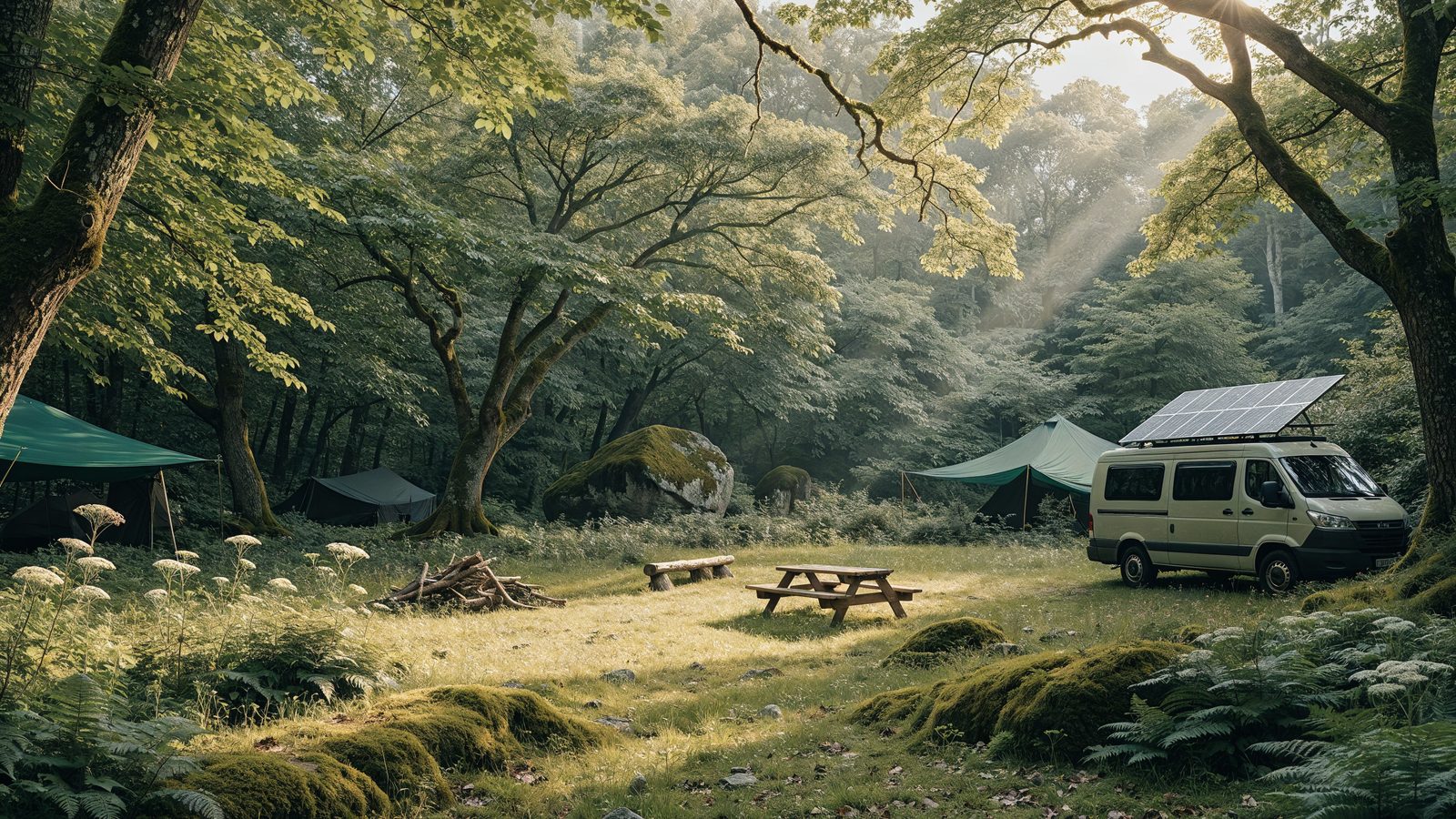
A label is no guarantee that everything is perfect, but it is a handy starting point. Also look for concrete signs: solar panels, waste separation, a natural layout and local produce in the shop or café.
Save water, energy and plastic
Water is scarce at many campsites, especially in southern Europe. Shower for less time, turn off the tap while brushing your teeth, and reuse water where you can. Small habits add up quickly on a busy site.
Avoid single-use plastic: bring your own water bottle, reusable tableware and shopping bags. Use biodegradable soap and washing-up liquid, especially when wild camping or near streams and lakes, to keep the water clean.
Respect nature and wildlife
Enjoy wild animals from a distance and don't feed them; human food is bad for them and disturbs their behaviour. Keep dogs on a lead in nature reserves and during nesting season.
Don't pick protected plants or collect 'souvenirs' from nature. Keep noise and lighting modest in the evening, so both the wildlife and your neighbours can rest.
Travel closer and support local
The biggest environmental impact of a holiday is often the journey there. A campsite closer to home, or reachable by train and bus, cuts emissions directly, and often makes for a more relaxed trip.
On Ovisola you can find campsites across Europe on the map, compared by region and amenities, so it's easy to discover a greener destination closer by. Once there, support local farmers, markets and restaurants; it keeps your footprint small and your holiday authentic.
Frequently asked questions
Is camping really greener than other holidays?+
Generally, yes. A tent or pitch uses far less energy, water and materials than a hotel or holiday home, and you live closer to nature. The exact impact depends on your choices, especially how far and by what means you travel.
What does 'leave no trace' mean?+
It is the principle of leaving your pitch at least as clean as you found it: take all your waste with you, stick to paths and pitches, don't damage plants, and only light a fire where allowed. That way nature stays intact for the next visitor.
Which eco-labels exist for campsites?+
Well-known examples are Green Key, the EU Ecolabel and ECEAT. They assess things like water and energy use, waste management and nature care. It's a handy starting point, but also look at the concrete measures on the site itself.
Which soap is best to use at a campsite?+
Choose biodegradable soap, shampoo and washing-up liquid. This matters most when wild camping or near streams and lakes, so you don't pollute the water. Even then, use as little as possible and don't rinse directly into open water.
How do I reduce the impact of my journey to the campsite?+
The journey is often the heaviest part. Choose a destination closer to home or a campsite reachable by train and bus. On Ovisola you can compare campsites across Europe on the map to easily find a greener option closer by.