Where to camp cool in a heatwave: shade, water and altitude
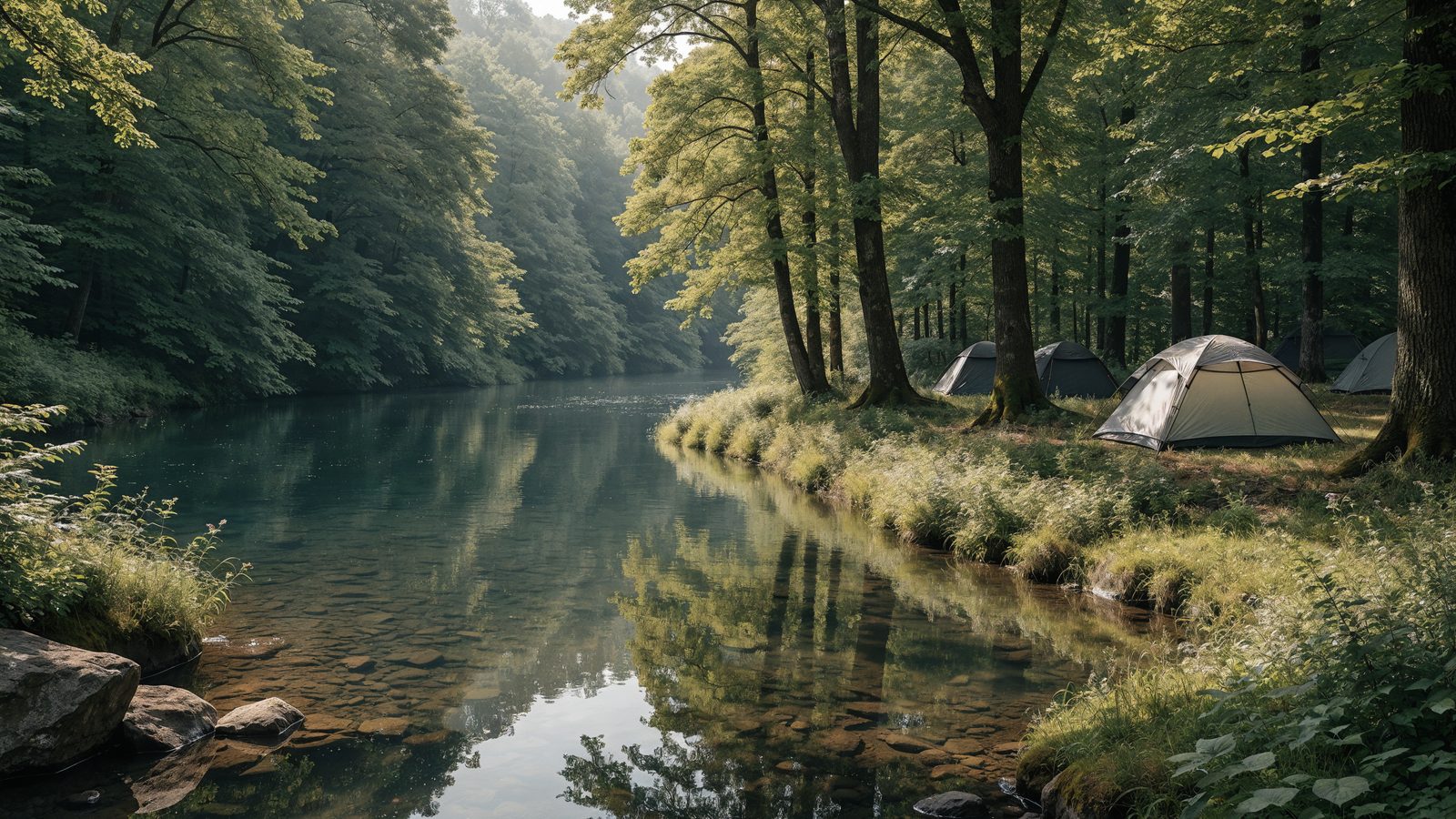
Campsites that stay pleasant in a heatwave share three things: shade, nearby water and elevation. Tree canopies filter the sun and keep a spot noticeably cooler, water in a river, lake or sea provides relief and fresher air, and higher-lying regions are usually a few degrees cooler than the lowlands. Forest campsites in the Ardennes, the Eifel or the Vosges often combine all three naturally, as do spots by a lake or on a breezy coast.
When temperatures climb toward the thirties or higher, the location of your campsite largely decides how bearable your holiday is. Shade, water and altitude make the difference between sweating in the tent and a pleasant summer. Below you will read which kinds of campsites and regions stay cool, and how to spot one before you book.
Why shade and water make the difference
Direct sun on your tent or caravan is the biggest heat source at a campsite. Tree canopies filter sunlight and keep the temperature underneath noticeably lower, especially during the midday hours. A pitch under tall broadleaf trees can therefore feel far more comfortable than an open field in full sun.
Water helps in two ways. A river, lake or the sea gives you a chance to cool off, and the surface water keeps the surrounding air fresher and a little more humid. On the coast, a sea breeze often adds a cooling wind that inland areas lack. In short, forest and water together offer the most comfortable summer pitch.
Forest campsites: natural shade all day
A genuine forest campsite is perhaps the most reliable choice in the heat. Because the canopy provides shade for most of the day, the ground warms up less and it stays more pleasant under the trees, at night too. Regions such as the Ardennes, the Eifel, the Vosges and the German and French uplands are full of wooded campsites.
When choosing, pay attention to the type of vegetation: tall, mature broadleaf trees give far more shade than low shrubs or young planting. A pitch on the forest edge or among the trees is worth gold in summer, even if you catch a little less morning sun. That is exactly what makes such a spot so pleasant during a heatwave.
By the water: river, lake or sea
Campsites by a river or lake often lie in a valley, where the surrounding hills add extra shade and the air stays cooler. In the Ardennes, for example, many campsites sit along rivers such as the Ourthe, the Semois or the Lesse, where you can step straight into the water and the dense forests along the banks provide extra shade.
Large lakes such as Lake Garda, the Alpine lakes or the French and German lakes combine swimming water with an often gentle breeze. On the coast, think of the Dutch and Belgian shore, the Atlantic coast or the Mediterranean, where the sea wind softens the daytime heat. On Ovisola you can filter campsites by 'near water' or 'by the sea' to find such spots more easily.
Higher-lying regions: a few degrees cooler
In record temperatures it is smart to seek out altitude: mountains and hilly landscapes are almost always a few degrees cooler than the lowlands. The higher you go, the lower the average temperature, and at night it often cools down noticeably, which makes sleeping a good deal more comfortable.
Think of campsites in the Alps, the Pyrenees, the Vosges, the Jura or the higher parts of the Ardennes and the Eifel. Even a few hundred metres of altitude can make a noticeable difference. Combine elevation with forest and water, and you have the coolest base for a summer holiday.
On the coast: wind and cooling
The coast is a classic escape from inland heat. During the day a cooling sea breeze often blows, because the land warms up faster than the water, so the perceived temperature on the beach is lower than a few kilometres inland.
On the coast, do choose a campsite with shady pitches or dune planting on purpose, because open beach campsites can actually feel hot in full sun. The combination of wind, swimming water and some shade makes a coastal campsite a fine option in a warm summer.
How to spot a cool pitch before you book
Look at photos and site maps for the vegetation: plenty of tall trees and greenery point to shade, whereas a bare lawn in full sun heats up more. A location by a river, lake or sea, or in a valley between hills, is a good sign.
When booking, ask for a shady pitch where possible, or deliberately choose a spot on the forest edge or close to the water. On a platform like Ovisola you can filter campsites by location and type, so you can more quickly find a spot that stays pleasant in the heat. That way you start your summer holiday on the coolest possible base.
Frequently asked questions
Which campsites stay coolest in a heatwave?+
Forest campsites with plenty of tall trees, campsites by a river, lake or sea, and campsites in higher-lying regions usually stay coolest. The combination of shade, water and altitude works best. Regions such as the Ardennes, the Eifel, the Vosges and the Alps therefore often score well.
Why is a forest campsite cooler than an open field?+
Tree canopies filter sunlight and keep the temperature underneath noticeably lower, especially in the afternoon. The ground warms up less, so it stays more pleasant by day and at night than on an open lawn in full sun.
Is the coast really cooler during a heatwave?+
On the coast a cooling sea breeze often blows because the land warms up faster than the water. As a result the perceived temperature on the beach is usually lower than further inland. Do choose a campsite with some shade, because open beach pitches can feel hot in full sun.
Are higher-lying campsites really cooler?+
Yes, mountains and hills are almost always a few degrees cooler than the lowlands, and at night it usually cools down noticeably. Even a few hundred metres of altitude can already make a difference, which mainly makes sleeping more comfortable.
How do I know if a campsite has a shady pitch?+
Check photos and site maps for plenty of tall trees and greenery, and note whether it sits by water or in a valley. When booking, ask for a shady pitch, and filter by location and type on platforms like Ovisola to find cool spots more easily.